

The Rebel Yellow - Issue #177
Editor’s Note: We are shutting down in 22 days, here’s how you can help.
Asian American athletes are competing at the Milan Cortina Winter Olympics, representing Team USA and other national delegations across figure skating, snowboarding and freestyle skiing. Federal immigration enforcement is under scrutiny after two fatal shootings involving ICE agents in Minnesota, while newly unsealed Jeffrey Epstein-related documents have raised questions involving political figures in Asia and the U.S. The issue also includes developments in school admissions policy, higher education, professional sports and a federal case involving fabricated anti-Asian threats, reflecting the breadth of legal, political and cultural issues affecting Asian Americans.
2026 Winter Olympics: Asian American athletes compete on world stage
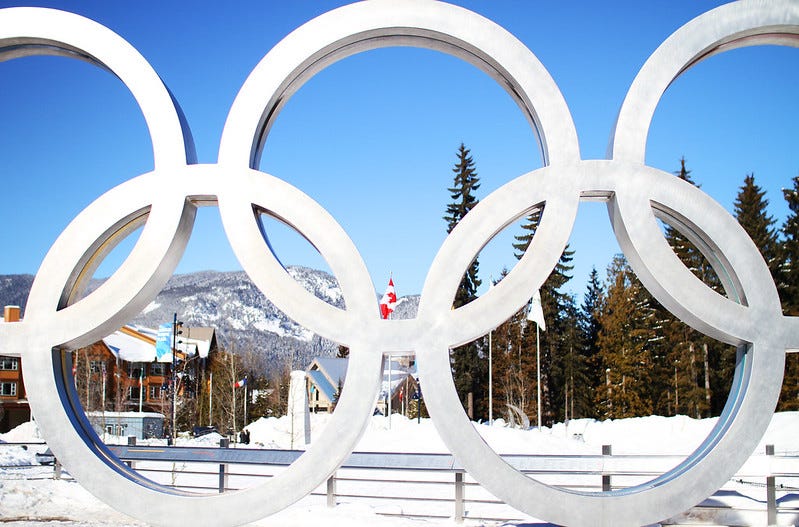
Asian American athletes are currently taking part in the Milan Cortina Winter Olympics representing Team USA as well as several other national delegations. The competitors are entered across snowboarding, figure skating and freestyle skiing as the Games run Feb. 6–22 in northern Italy.
Team USA’s Asian skaters and snowboarders
Alysa Liu is competing in women’s figure skating after returning to elite competition following a two-year break. During the opening stages of competition, the 20-year-old athlete skated in the figure skating team event, contributing points in the women’s short program.
Team USA’s pairs lineup also includes Ellie Kam, who earned selection through U.S. Figure Skating. Kam was born on a U.S. military base in Japan to a Japanese mother and a father of Chinese and Hawaiian descent. She is joined by Spencer Akira Howe, a half-Japanese skater who previously represented Japan before changing federations and partnering with Emily Chan.
Snowboarding star Chloe Kim, who recently suffered a shoulder injury, is also competing for Team USA in women’s halfpipe. The 25-year-old is a two-time Olympic gold medalist who returned to competition following the Beijing Games. She is joined by Lily Dhawornvej, a 16-year-old Thai American who qualified for the Olympic team through results on the international circuit, including a silver medal at the Laax Open earlier this season.
Brandon Kim, a 24-year-old Stanford University student who took a year off from his studies to train, is making his Olympic debut in short track speed skating. Kim broke a nearly 13-year-old U.S. national record in the 500 meters at the U.S. Championships earlier this season, surpassing the mark previously held by J.R. Celski.
Asian American athletes competing for other nations
Asian American athletes will also compete under other national flags in Italy, including two of the most closely followed figures in the field. Eileen Gu, a San Francisco native, is competing for China for a second consecutive Olympics after switching her Olympic eligibility in 2019. Gu won two gold medals and one silver at the 2022 Winter Games and has remained active on the World Cup circuit since, making her one of the most prominent athletes in freestyle skiing.
Gu’s continued representation of China has renewed debate in the U.S., particularly because Chinese law does not recognize dual citizenship. The 22-year-old star athlete has declined to discuss her citizenship status, telling the South China Morning Post it was “sad” when attention on her nationality overshadowed her performances and that her focus has “always been to promote my sport.” Olympic and international skiing officials have said her eligibility complies with competition rules.
Also competing for another nation is Tallulah Proulx, a 17-year-old Filipino American born in California and raised in Park City, Utah. Proulx qualified to represent the Philippines in giant slalom and slalom, becoming one of the youngest athletes in the alpine field. She previously competed for the Philippines at the 2025 Asian Winter Games, where she finished 16th in the slalom.
Trump admin scales down Minnesota operation amid resounding backlash
Border czar Tom Homan announced Wednesday that 700 federal immigration officers are leaving Minnesota effective immediately, a 25% reduction in deployment prompted by growing backlash over the killing of two U.S. citizens during enforcement operations.
State of play: The drawdown follows a weeks-long crisis that began with an Immigration and Customs Enforcement (ICE) agent fatally shooting Renee Good on Jan. 7 and worsened with the subsequent killing of Alex Pretti on Jan. 24. The administration had deployed roughly 2,800 officers to Minnesota in what it called the “largest immigration enforcement operation ever” before President Donald Trump replaced operation chief Gregory Bovino with Homan shortly after Pretti’s death. Speaking to NBC Wednesday, Trump dialed down on his administration’s characterizations of the slain, saying “maybe we can use a little bit of a softer touch,” though he still described both victims as “not angels.”
Despite the drawdown, around 2,000 federal immigration personnel will remain in Minnesota, 13 times higher than the state’s normal deployment of 150 officers. Homan credited what he called “unprecedented collaboration” from county sheriffs who have agreed to notify ICE before releasing undocumented immigrants. He also announced body cameras will be distributed to immigration officers nationwide.
Why this matters: The Minnesota crisis has intensified concerns already building within Asian American communities since the beginning of the second Trump administration. Between March and fall of last year, opposition to Trump’s immigration policies among Asian Americans rose from 58% to around 70%, according to AAPI Data and AP-NORC polling, while a separate AtlasIntel survey found Asian American voter support for Trump dropping from 57% in July to 26% by September. Needless to say, the deadly shootings in Minnesota represent a new escalation that has crystallized longstanding fears about enforcement overreach.
Anxieties extend beyond immigration status itself. Asian American communities worry that militarized enforcement tactics and expanded federal powers threaten constitutional protections for legal residents and citizens navigating a system where racial profiling and documentation demands have historically affected them disproportionately.
When federal agents killed Pretti in late January, Asian American lawmakers responded forcefully. Rep. Ro Khanna (D-Calif.) attended his vigil and called ICE “a rogue, militarized police,” while Sen. Tammy Duckworth (D-Ill.) introduced legislation requiring independent investigations into federal use of force. Their reaction underscores how aggressive enforcement, regardless of stated targets, erodes community trust in the federal authorities many AAPI families must interact with for immigration matters.
Growing unpopularity: The Minnesota operation has clearly damaged Trump politically across multiple fronts. A new NPR/Marist poll shows his approval rating at 39%, dragged down by independents, Latinos and younger voters who previously backed him in 2024, while Pew Research recorded 37% approval. Meanwhile, 65% of Americans now say ICE has “gone too far,” up 11 points since last summer.
The shootings have also fueled skepticism about the administration’s credibility. A new Quinnipiac University survey found that 60% distrust the administration’s account of Pretti’s death, while 59% see both killings as indicative of systemic failures within enforcement operations. Homeland Security Secretary Kristi Noem faces particularly sharp criticism, with 58% wanting her removed after she circulated inaccurate information about the victims.
Trump’s own acknowledgment that a “softer touch” might be needed signals the administration recognizes its hardline approach has backfired. Any further drawdowns, however, depend on counties continuing to cooperate and demonstrators ending interference with arrests, Homan said, though some legal analysts warn Minnesota counties risk litigation if they work with ICE.
Leaked memo reveals Gabbard was accused of restricting intel for politics
A memo obtained by the Associated Press reveals that Director of National Intelligence Tulsi Gabbard was accused in a whistleblower complaint of restricting access to a classified intelligence report for political reasons and that her office’s general counsel did not inform the Department of Justice about a possible crime.
What we’re learning: The whistleblower complaint, reportedly filed on May 21, 2025, alleges that Gabbard “restricted” the distribution of a “highly classified intelligence report” for “political purposes” and that her general counsel’s office “failed to report a potential crime to the Department of Justice, also for political purposes.” The acting inspector general initially deemed it to be of “urgent concern,” but three days later, after receiving additional evidence, determined that the first allegation appeared “not credible.”
Despite this assessment, its journey to Congress was marked by significant delays. Sen. Mark Warner (D-Va.) told the AP that it took “six months of negotiation with the director of national intelligence to share that whistleblower complaint,” contradicting Gabbard’s confirmation hearing testimony “that she would protect whistleblowers and share the information of timely matter.” Copies are hand-delivered this week to the “Gang of Eight” lawmakers.
Why this matters: As one of the most prominent AAPI officials in the Trump administration, Gabbard’s actions carry symbolic weight for communities seeking representation at the highest levels. Yet her handling of this whistleblower complaint raises fundamental questions about whether representation matters if principles erode. Her recent conduct reveals a troubling pattern that contradicts her earlier public positions.
Last May, her team led an investigation that seized Puerto Rico’s voting machines to probe unproven Venezuelan interference claims, as per Reuters. More recently, she was present during an FBI raid at a Fulton County, Georgia election office, a location tied to President Donald Trump’s misleading allegations about the 2020 election. This trajectory is particularly striking for someone who once opposed Venezuela intervention and declared that the U.S. “needs to stay out of Venezuela.”
Gabbard’s shift from antiwar advocate to pursuer of unfounded election theories demonstrates how political expediency can override core convictions.
Epstein files reveal Soon-Yi Previn dismissed #MeToo
Soon-Yi Previn, the wife of filmmaker Woody Allen, told Jeffrey Epstein in a 2018 email that the #MeToo movement “has gone too far,” according to correspondence unsealed last week. Previn, now 55, also directed blame at a 15-year-old girl involved in the Anthony Weiner sexting scandal rather than the former congressman in the same email chain. The disclosures are part of a growing tranche of documents from the Justice Department detailing Epstein’s private communications years after his 2008 conviction for procuring a minor.
