

Today’s stories open with a new national survey finding that Asian Americans are the only group in the country whose worry outpaces hope. From there, the issue moves through a Supreme Court ruling that narrows voting protections, a “Jeopardy!” champion who used his exit to make an argument and a Wall Street lawsuit that raises hard questions about race and power. Two memorials, one in Seattle and one in Auckland, pull the lens toward history. And behind all of it, a global report on who is getting paid and who is not.
Also, in case you missed it, be sure to check out The Rebel Yellow Monthly’s AAPI Heritage Month zine here.
Featured
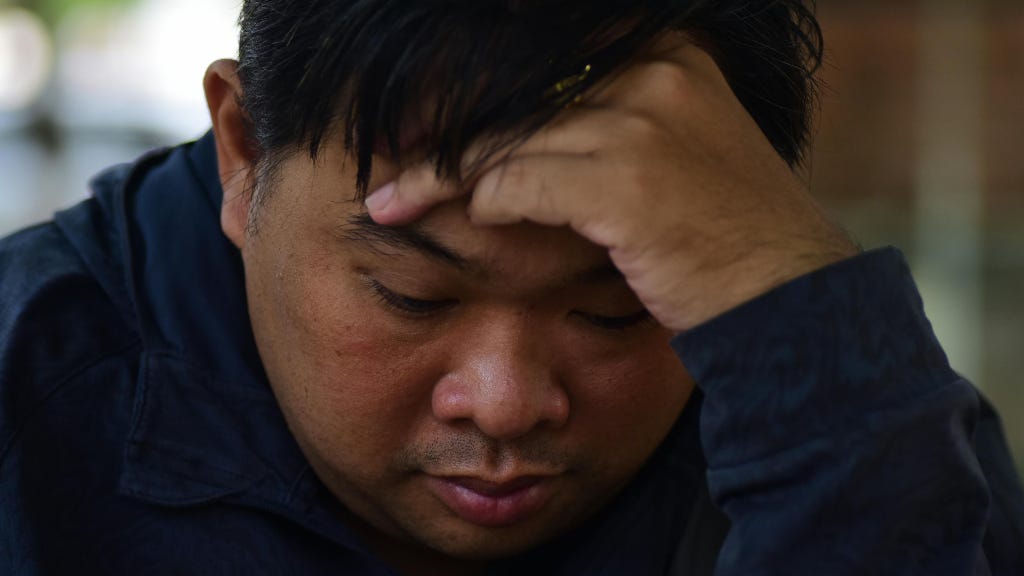
Asian Americans more worried than hopeful as federal pressures mount, new survey reveals
The 2026 STAATUS Index reveals that Asian Americans and Pacific Islanders are the only racial or ethnic group in the country whose worry outranks hope. The survey asks AAPIs about the impact of specific federal policies and finds consistent gaps between how the community experiences those policies and how the general public perceives them. What the numbers show about visibility, safety and belonging is not easy to look away from.
What else we’re tracking
Supreme Court limits Voting Rights Act in Louisiana redistricting ruling
The Supreme Court ruled 6-3 that Louisiana’s second majority-Black congressional district was unconstitutional. Asian American civil rights groups say the decision destroys core protections for minority voters and warn the consequences will reach from Congress to local school boards.
‘Jeopardy!’ champ Jamie Ding ends 31-game streak, criticizes immigration enforcement
Jamie Ding’s 31-game run is over, but he did not leave without saying something. The son of Chinese immigrants used his time in the spotlight, and what he said after it ended, to make an argument that went well beyond anything on the board.
Asian male banker accuses JPMorgan executive of drugging, racial slurs
A lawsuit filed in New York and subsequently returned accuses a JPMorgan Chase executive director of months of sexual coercion and racial abuse targeting a junior Asian male banker. The bank says an internal investigation found no support for the claims. What happens next is unclear, and so is whether it will ever be refiled.
Seattle sculpture honoring 1886 Chinese expulsion hits funding goal
For more than two decades, a bronze sculpture commemorating Seattle’s violent expulsion of its Chinese community in 1886 has waited for funding. Last week, it finally arrived, and the people who made it happen bring their own remarkable histories to a project its organizers now describe as an act of resistance.
Proposed ‘comfort women’ statue rejected in Auckland after Japan raises concerns
A memorial honoring women subjected to sexual slavery by Japan’s military will not be installed in Auckland, at least not yet. The rejection followed a formal diplomatic objection from Japan’s ambassador, a public consultation that showed majority opposition and a warning whose implications reached far beyond a single park.
CEO compensation surged 20 times faster than worker pay in 2025
A joint report by Oxfam and the International Trade Union Confederation found CEO pay at the world’s largest corporations rose 20 times faster than worker wages in 2025. The figures on who gained and who lost ground in 2025 are stark enough to reframe the stories above.
Why read Issue #206?
Belonging is not a mere feeling. To those who have always sought it, it is a set of conditions — legal, economic, cultural and historical — that either hold or do not. This week, several of them were tested. Some held, some did not. Issue #206 is about what it looks like when a community watches that happen in real time, across courtrooms and survey data and city halls and one quietly defiant game show goodbye.
Support independent Asian diaspora journalism. Become a paid subscriber to read the full stories and help sustain The Rebel Yellow.
The Rebel Yellow is supported in part by funding from The Asian American Foundation (TAAF). Funders do not influence story selection, reporting, or editorial decisions. All editorial content is independently produced by The Rebel Yellow team.
We carry our anxiety and anger inside. We don't share it and when it finally comes out it's always in unhealthy ways. Western therapy and Asian minds and all.