

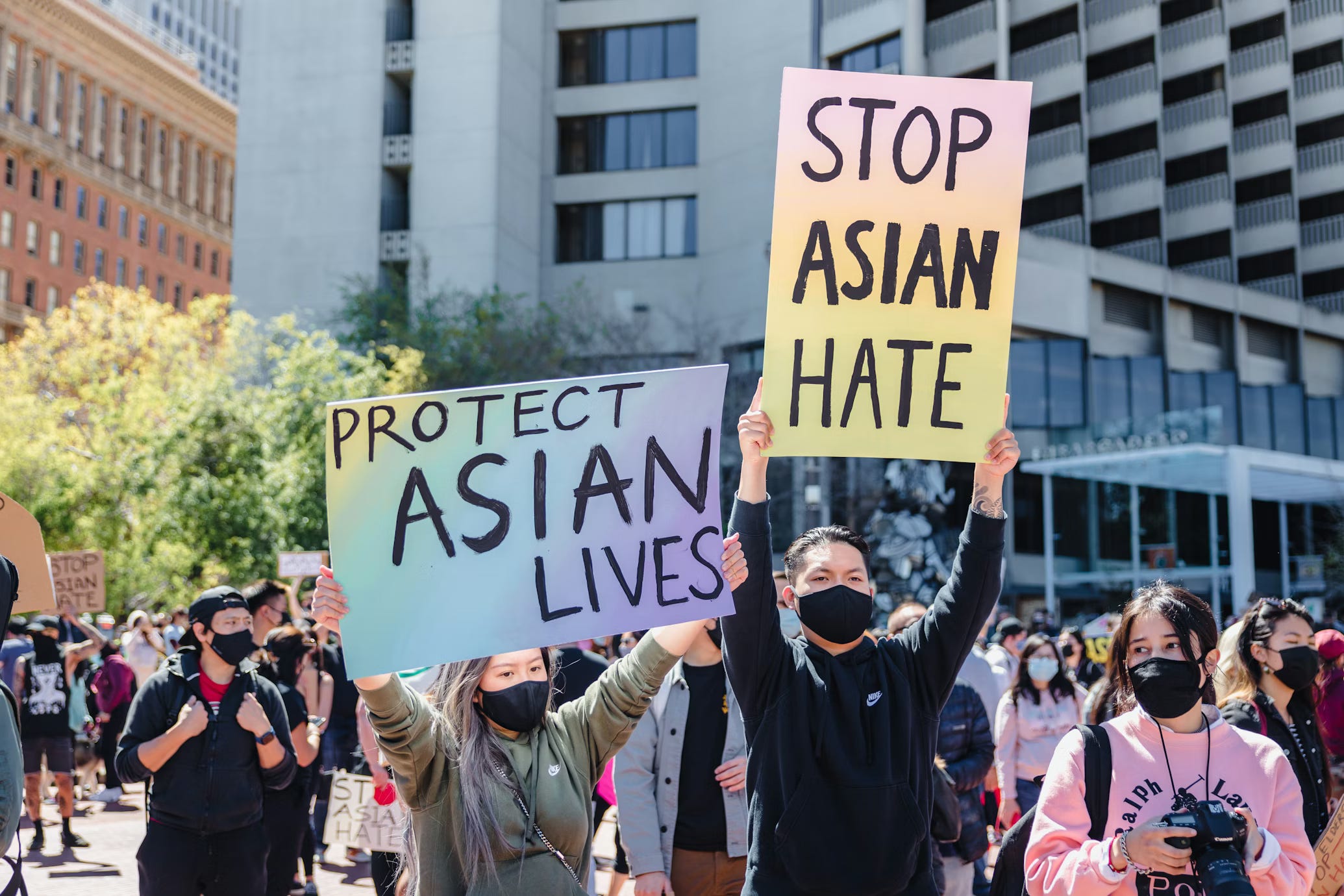
The year 2025 tested Asian American communities with devastating tariffs that crushed small businesses, immigration raids that separated families, and escalating tensions over ancestral homelands. By year’s end, over 3 million Asian American-owned businesses faced impossible choices, DEI programs were dismantled, ICE arrests of Asian people more than tripled and China-Taiwan tensions peaked with an $11.1 billion U.S. arms sale followed by Beijing sanctions. Asian American approval of Trump nosedived as economic, civil and geopolitical crises compounded.
But Asian American communities didn’t just survive 2025. They organized, mobilized and won. In November, New York City elected Zohran Mamdani — who is also The Rebel Yellow’s 2025 Rebel of the Year — as its first South Asian American and Muslim mayor. Despite racist attacks and Trump’s threats, the 34-year-old democratic socialist won with nearly half of Asian American voters backing him, including 20% who had voted for the president in 2024. His victory proved that effective organizing can build coalitions and change minds even in the most hostile environments.
The blueprint for 2026
As 2026 begins, the path forward is clear: scale what worked in the past year and build on momentum already gained. The strategies that delivered Mamdani’s victory, including door-knocking, coalition-building and grassroots mobilization, must expand across every community facing attack.
Expanding political power. The time for Asian American political organizing has never been more urgent. Building on 2025’s successes means:
Growing the ground game. If 3 million doors won New York City, imagine what 10 million doors could win nationwide. Grassroots organizations need volunteers, funding and infrastructure to reach every Asian American household before the 2026 midterms.
Recruiting and supporting candidates. Mamdani’s victory opens doors for more Asian American candidates at every level of government. Communities must identify, train and back leaders who understand their struggles and will fight for their interests, from school boards to state legislatures to Congress.
Converting hearts and minds. Twenty percent of Trump voters switching to support Mamdani proves that persuasion works. Asian American organizers must engage across political divides, having difficult conversations with family, friends and neighbors about what’s at stake and what’s possible.
Protecting economic survival. Small businesses remain under siege, but collective action can provide resilience by:
Building mutual aid networks. Communities must establish formal systems for sharing resources and financial support. When tariffs make traditional supply chains unaffordable, community networks become economic lifelines.
Leveraging buying power. Asian American consumers and businesses represent billions in purchasing power. Organized boycotts, strategic patronage and community-first spending can protect vulnerable stores while pressuring corporations and politicians to listen.
Pursuing legal and legislative relief. The Congressional Asian Pacific American Caucus (CAPAC) must be pushed to fight harder for small business assistance and trade policies that don’t weaponize heritage ties. Legal challenges to discriminatory policies should be filed and funded by organized communities.
Defending civil rights. The assault on DEI continues, but resistance is growing. This can be done by:
Documenting and litigating. Every rollback, discriminatory policy and violation of civil rights must be documented and challenged in court.
Protecting birthright citizenship. The attack on the constitutional right affirmed by Wong Kim Ark in 1898 threatens to create second-class citizens. Organizing must include public education campaigns, legal defense funds and political pressure on legislators to protect this fundamental right.
Supporting immigration defense networks. With ICE arrests tripling in 2025, communities need know-your-rights workshops, legal aid funds and rapid response teams ready to act when enforcement threatens families.
Navigating geopolitical tensions. Asian Americans cannot control foreign policy, but they can control the narrative about their place in American society by:
Rejecting the “yellow peril” rhetoric. Communities must vocally and visibly push back against national security discourse that questions loyalty. This means social media campaigns and public actions that assert belonging without apology.
Building transnational solidarity. Deep ties to multiple countries across Asia are strengths, not vulnerabilities. Organized Asian American communities should advocate for diplomacy over militarization and refuse to be positioned as perpetual foreigners when tensions rise abroad.
Strengthening community bonds. When external threats increase, internal cohesion becomes essential. Regular community gatherings and cultural celebrations remind everyone that isolation is defeat while connection is power.
The moment is now
The infrastructure for victory already exists. Grassroots organizations, community networks and political coalitions proved their effectiveness last year. Again, what they need now is scale through more volunteers, more funding, more candidates, more visibility and more pressure on those in power.
Asian American communities have always thrived through adversity. However, thriving now requires more than survival. It demands strategic and collective action. The winning that started last year will accelerate only if organizing grows louder and impossible to ignore. After what 2025 revealed about both the threats faced and the power held, renewed action is inevitable. How many will join, how strong the coalitions will become and how much will be won are the questions to be worked upon and answered.
The time to act is now. The blueprint is clear, and as we can see, the future belongs to those who organize for it.
