

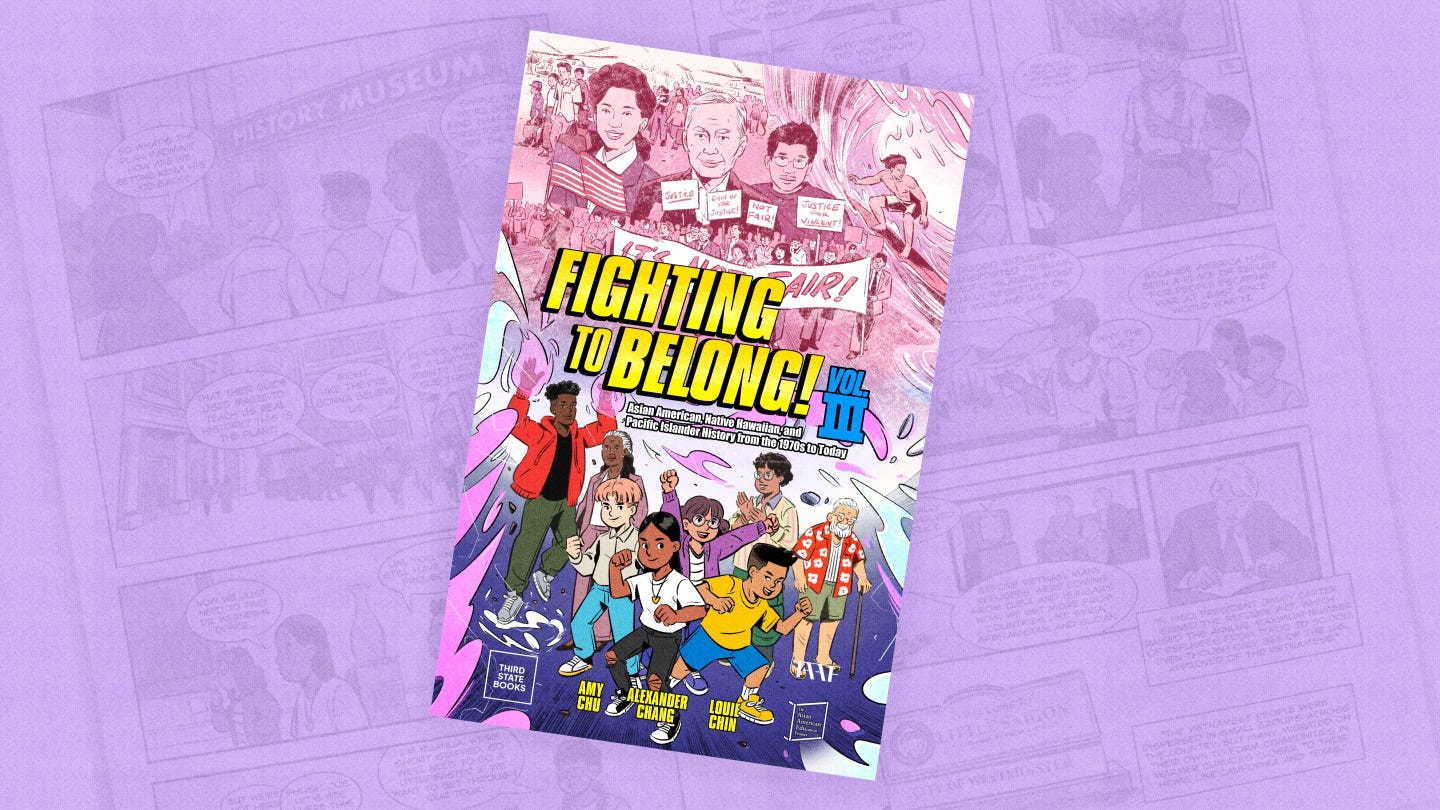
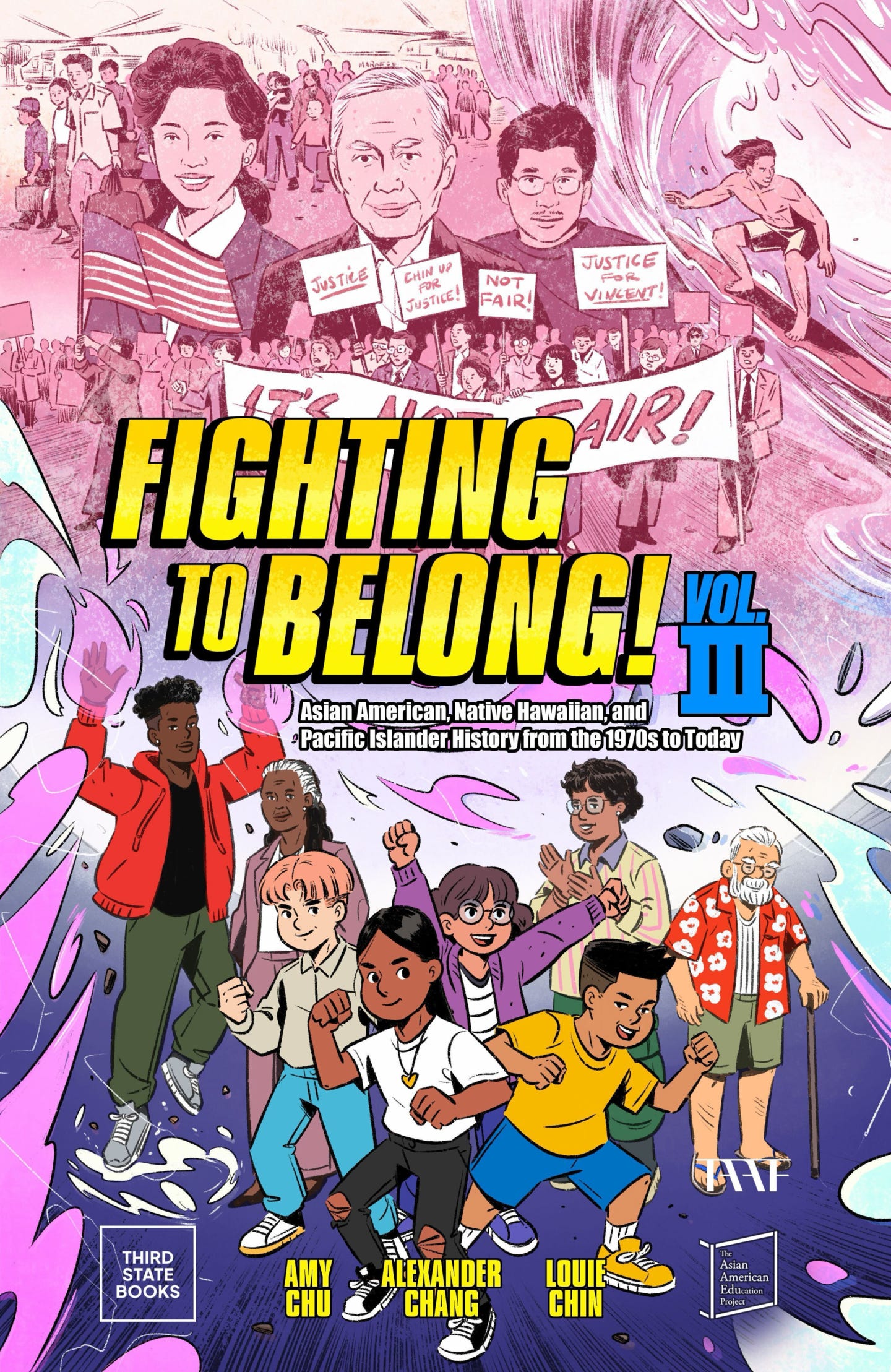
The Asian American Foundation (TAAF) and Third State Books released the final volume of a three-part graphic novel series on AAPI history this week, featuring names and events largely overlooked in traditional education.
New stories
“Fighting to Belong!” begins with the arrival of Filipino “Manilamen” in Louisiana in the 1700s, followed by 20th century events such as the incarceration of Japanese Americans in WWII. Now, Volume III picks up in 1970, with middle schoolers moving from the Vietnam War through the backlash South Asian communities faced after 9/11, to the anti-Asian hate that surged during the COVID-19 pandemic.
The final installment also shows AAPI communities “living through and being shaped by history at this very moment,” a TAAF spokesperson told The Rebel Yellow. Real-life figures include Chinese American figure Vincent Chin, who was fatally beaten in Highland Park, Michigan, in 1982, as well as Balbir Singh Sodhi, a Sikh gas station owner shot and killed in Mesa, Arizona, four days after 9/11. Joseph Ileto, a Filipino American mail carrier murdered by a white supremacist in Los Angeles in 1999, is also highlighted.
Reaching young readers
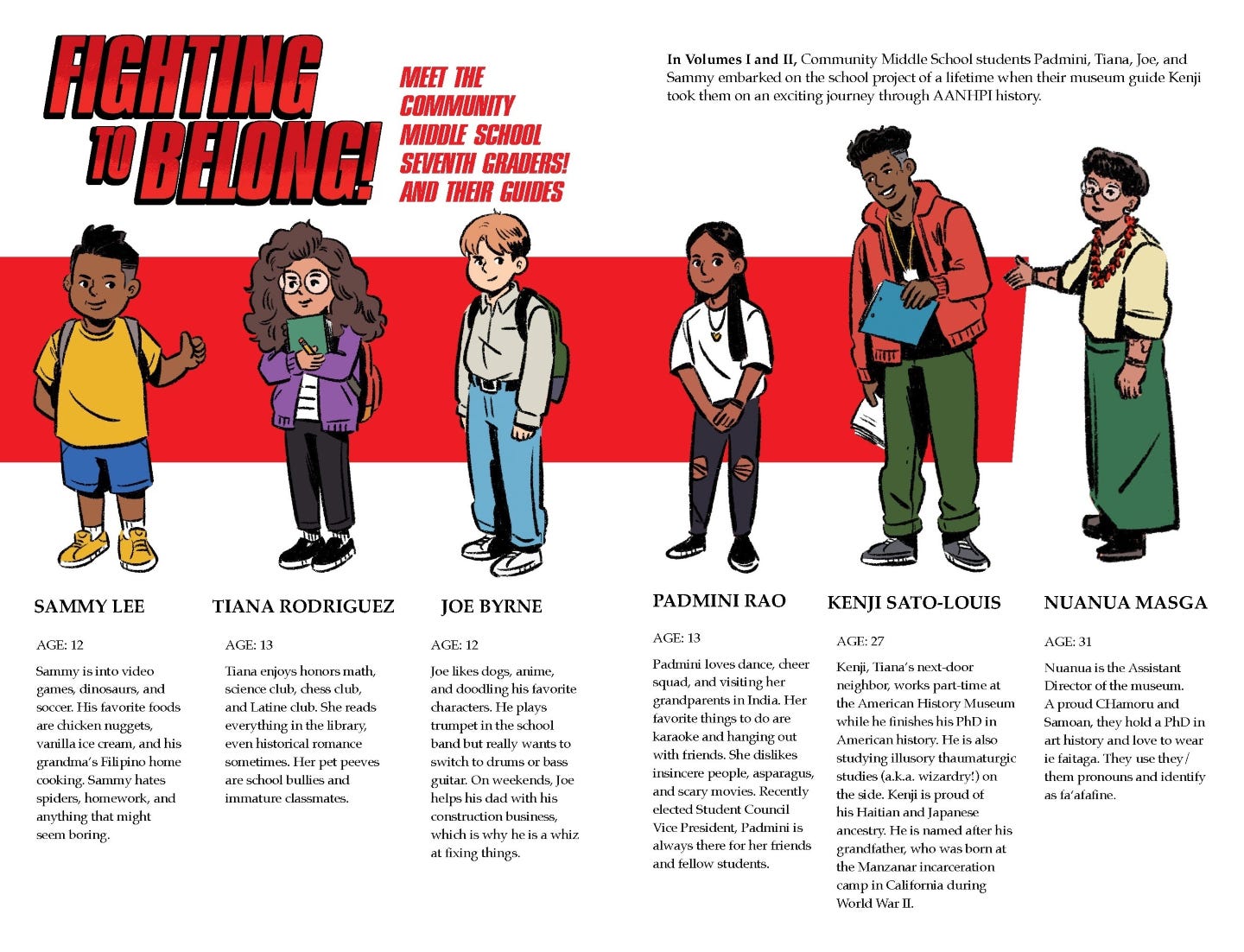
Bestselling comics writer Amy Chu, whose credits include “Wonder Woman” and “Deadpool,” co-wrote the book with Alexander Chang. “Bodega Cat” creator Louie Chin worked on the illustrations. “Graphic novels are a powerful medium for reaching young people, and Amy, Alexander, and Louie have managed to turn overlooked AAPI history into an immersive story that young readers can’t put down,” Stephanie Lim, co-founder and CEO of Third State Books, said in a statement.
TAAF has since introduced the series to students, parents, libraries, educators and school districts nationwide. The foundation’s programs team also promotes the books at education conferences and library events. Meanwhile, The Asian American Education Project, whose insights informed Volume III, has developed curriculum guides and other classroom materials that help teachers build lessons around the books.
Gaps in AAPI history education
As we previously reported, TAAF’s 2026 STAATUS Index found that 53% of Americans could not name even one significant event from Asian American history. As of July, only 13 states had laws requiring some form of Asian American studies. TAAF intends to keep supporting educators as more states adopt such requirements, and its AAPI History Hub offers hundreds of vetted, standards-aligned resources.
“At a time when the histories of immigrants and other communities are increasingly threatened with erasure, preserving and sharing the full story of America has never been more essential,” the spokesperson added. They noted how events of the past five years, particularly the pandemic-era surge in anti-Asian hate, still shape AAPI communities’ everyday experiences.
Hardcover, paperback and digital editions are now on sale. TAAF plans to combine all three books into a single-volume edition over the next year.
Support independent Asian diaspora journalism. Become a paid subscriber to read the full stories and help sustain The Rebel Yellow.
The Rebel Yellow is supported in part by funding from The Asian American Foundation (TAAF). Funders do not influence story selection, reporting, or editorial decisions. All editorial content is independently produced by The Rebel Yellow team.