

Today’s stories begin in Saipan, where a Chinese national died the day after immigration agents detained him and they waited over a week to say so. In the courts, a federal judge blocked President Donald Trump’s second birthright citizenship order for a certified class of children, while his administration returned to the Supreme Court over mail voting.
Moving on, South Asian lawmakers met in Washington over threats to their communities. Then, we see a Missouri plate carrying a slur since 1979 and Ohio State settling a federal case over a professor’s China ties. Lawmakers also pressed the State Department over Americans missing after the Nepal disaster. We wrap the issue with the NBA penalizing the Clippers a year after a Filipino American journalist’s reporting.
Featured
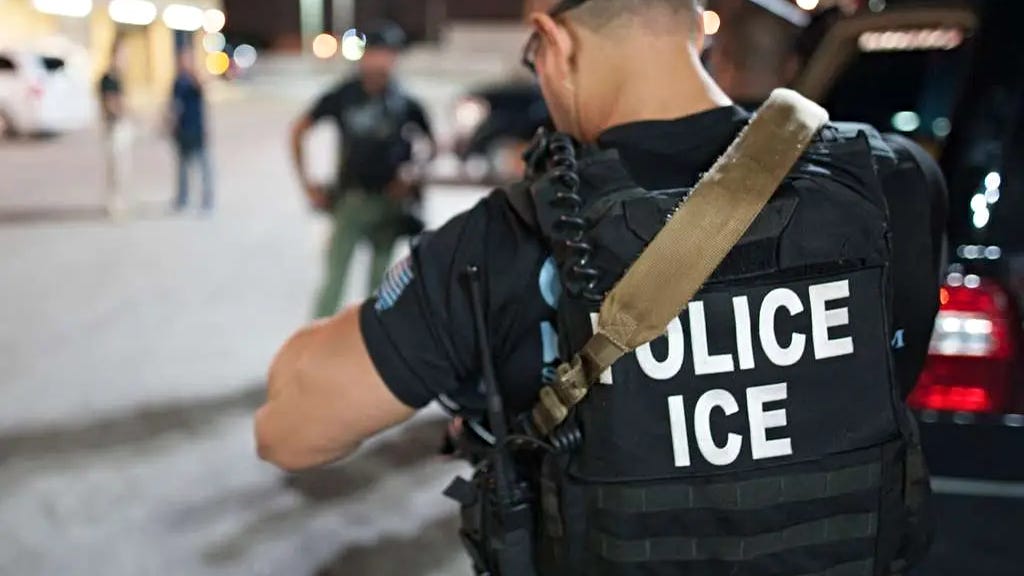
ICE takes 9 days to disclose another Chinese national died in their custody
Lianyong Wei was found unresponsive at a Saipan corrections facility a day after Immigration and Customs Enforcement detained him. Local authorities announced his death Aug. 24, but ICE said nothing until Sept. 1.
Wei had faced local assault charges. He was the fifth known Chinese national to die in ICE custody since March 2025, two months into the second Trump administration.
What else we’re tracking
Judge blocks Trump’s second birthright citizenship order
A federal judge called the order almost certainly unconstitutional as applied to a certified class of children and barred agencies from enforcing it against them. The injunction is narrow, though, and most of the administration’s enforcement plans stand.
Trump admin presses Supreme Court a third time on mail ballot rule
North Carolina began mailing ballots Friday and more states follow within days. The administration, however, told the justices that mailed ballots cannot be recalled.
South Asian lawmakers renew anti-hate crimes push
U.S. Rep. Raja Krishnamoorthi convened four colleagues in Washington as new research counted a 109% rise between 2023 and 2025 in online anti-South Asian slurs tied to targeted violence. His bill on hate crimes has sat in committee since May.
An anti-Asian slur stayed on this Missouri license plate for decades. Here’s why
An Asian American man found a slur on a personalized plate that had cleared three levels of state review. Then the family behind it explained why the word had been on the car since 1979.
Ohio State to pay Justice Dept. $2.1 million over China ties its professor long disclosed
Ohio State settled without admitting it failed to tell federal agencies about researchers’ Chinese affiliations and funding. Documents in the case show the professor at the center had reported some of those posts internally since at least 2014.
Congress demands US help find at least 75 unaccounted Americans after Nepal disaster
Twenty-seven lawmakers from both parties want thermal drones, satellite imagery and high-altitude aircraft sent into the disaster zone. Many of the missing are Americans of Indian descent who traveled on pilgrimage to Mount Kailash in Tibet.
NBA hits Clippers with historic fine nearly a year after Pablo Torre’s groundbreaking investigation
A Filipino American journalist spent seven months digging through a startup’s internal records. The league investigation that followed brought a record $30 million fine, a suspended owner and five forfeited first-round picks. The Clippers say they will fight it.
Why read Issue #255?
In this issue, we highlight how time is of the essence. ICE waited more than a week to acknowledge a death in custody, while Ohio State had a professor’s China ties on file nine years before its funders did. A questionable Missouri plate lasted 47 years and an NBA inquiry a year, both ending after an outsider raised them.
Interestingly, executive action seems to keep a different clock. A birthright order signed in August had an agency rule behind it by September, and mail voting reached the Supreme Court a third time. Meanwhile, lawmakers are still asking for rescue equipment in Nepal, and a hate crimes bill has sat since May.
Check out Issue #255 to see who’s made to wait.
Support independent Asian diaspora journalism. Become a paid subscriber to read the full stories and help sustain The Rebel Yellow.
The Rebel Yellow is supported in part by funding from The Asian American Foundation (TAAF). Funders do not influence story selection, reporting, or editorial decisions. All editorial content is independently produced by The Rebel Yellow team.