

The Rebel Yellow - Issue #163
Indian H-1B workers were left stranded abroad during peak holiday travel after expanded U.S. visa screening led U.S. consulates in India to cancel and delay visa interviews, pushing some rebookings into 2026 and disrupting employment and family plans. A new survey found that more than half of scientific peer reviewers now use artificial intelligence when evaluating manuscripts, while most researchers say they cannot tell whether journals use AI in their editorial processes. Public sentiment in the U.S. remained subdued, with only 10% of adults describing 2025 as a “great” year amid financial strain and job uncertainty, while surveys show many Asian Americans expect economic pressure, immigration concerns and discrimination to increase in the coming year.
Expanded social media vetting strands Indian workers during holiday travel
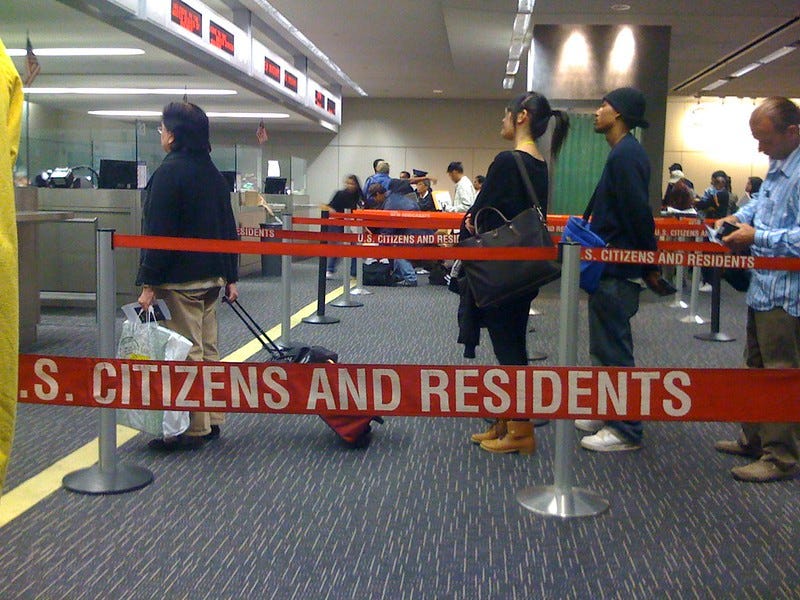
chIndian H-1B visa holders who returned to India earlier this month for U.S. visa stamping are spending the holidays stranded after American consular offices canceled scheduled interviews following the Trump administration’s expansion of social media and online presence screening. The cancellations impacted applicants with confirmed appointments at U.S. consulates in New Delhi, Mumbai and Hyderabad, many of whom had already completed biometric submissions. New interview dates were pushed months later, with some applicants reporting the earliest availability in spring or summer 2026.
Screenings cut interview capacity
U.S. officials have linked the cancellations to changes in visa screening procedures that took effect in mid-December. The U.S. Embassy in India confirmed that beginning Dec. 15, the State Department expanded online presence reviews to include all H-1B and H-4 visa applicants as part of standard screening.
Consular officials said the additional vetting reduced the number of interviews that could be conducted each day, contributing to widespread rescheduling. The embassy did not provide a timeline for when appointment capacity would return to previous levels or whether additional staffing would be added to address the backlog.
Immigration attorneys said the disruption was intensified by a reduction in daily interview slots following the expanded screening rollout, which coincided with the peak December travel period.
Work and family arrangements disrupted
Attorneys said canceled applicants were forced to reenter the visa scheduling system, where limited availability meant competing for a small number of interview slots each day. Some workers have been unable to secure new appointments at all, leaving them to monitor consular calendars while remaining in India for weeks or months beyond their planned stays.
Because H-1B holders must obtain a valid visa stamp abroad before reentering the U.S., the delays have created immediate compliance and employment challenges. Some U.S. employers have permitted temporary remote work from India, while others require physical presence due to operational or security requirements, placing workers at risk of unpaid leave or interrupted assignments.
Dependents applying under the H-4 category were affected alongside primary H-1B applicants, further complicating household planning. Attorneys said families have had to revise schooling, housing and childcare arrangements that were structured around short holiday visits, while employers face uncertainty as interview availability now stretches into 2026 for some applicants.
Half of peer reviewers now use AI while most researchers cannot tell when publishers do
Half of scientific peer reviewers now rely on artificial intelligence to evaluate manuscripts, yet 75% of researchers report they cannot tell if journals use the technology themselves. A survey of 1,600 academics recently conducted by the open-access publisher Frontiers found that 53% of reviewers have incorporated AI into their workflow, with 24% increasing use over the past year. Among early-career researchers, 87% reported using AI for manuscript evaluation.
