

Today’s stories feature a new poll catching Americans in the act of losing faith in their own dream, a Beijing robot outrunning the human half-marathon world record and a Queens teacher retiring after being accused of preying on Asian students. We also look at a $166 billion tariff refund triggered by the Supreme Court’s February ruling, an FBI director whose defamation suit faces a punishing legal bar, a vigil for a Chinese researcher allegedly questioned before his death, a study mapping campus bias across Asian, Jewish, Black and Muslim students and Sikh Americans marking Vaisakhi after a record year of hate crimes.
Featured
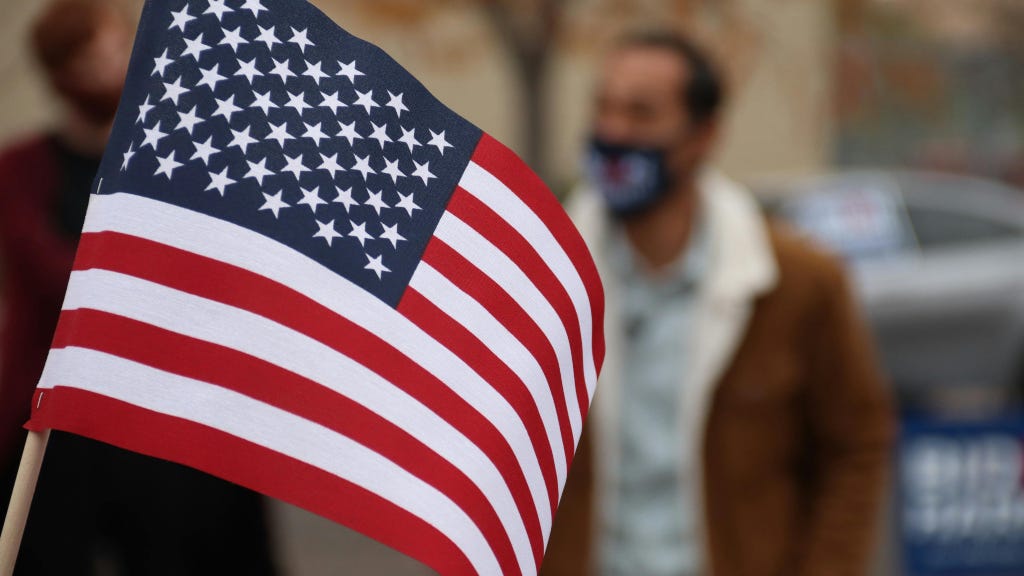
Americans say the American Dream is slipping out of reach, new poll finds
A Times/YouGov survey of 1,821 adults finds 59% saying success is harder to reach than it was a generation ago. Belief in the ideal is holding, but belief that it still delivers for everyone has not.
The same recalculation is running in reverse among Chinese students and early-career professionals in the U.S., some of whom told the Wall Street Journal the math no longer works.
What else we’re tracking
Trump administration opens $166 billion tariff refund process after Supreme Court defeat
A refund portal opened Monday for over $166 billion in duties the Supreme Court struck down in February, but Asian American grocers that absorbed rates as high as 50% on certain goods appear largely shut out. President Donald Trump, meanwhile, says he’ll “remember” which companies skipped the line.
Patel takes The Atlantic to court, but “actual malice” standard looms large
FBI Director Kash Patel’s $250 million suit against The Atlantic lands him in the same legal thicket that just swallowed a Trump complaint against the Wall Street Journal. One First Amendment attorney says the allegations “don’t even hit the backboard.” Still, the filing may raise costs for outlets weighing similar reporting on the first South Asian to lead the bureau.
NYC teacher accused of preying on Asian students will “irrevocably retire”
A Queens high school teacher will quietly retire on his $140,588 salary after a city watchdog documented what it called his predatory conduct toward young Asian women. The Department of Education was told to fire him in 2024, but he was reassigned instead. He has until the end of the year.
Vigil held for Chinese researcher who died on University of Michigan campus
Students and faculty gathered around a small altar last week for Danhao Wang, a Chinese assistant research scientist who died in March after a fall. Beijing has claimed a University of Michigan researcher was subjected to “hostile questioning” by U.S. federal law enforcement, but American authorities have confirmed nothing.
Campus bias affects Asian and other minorities alongside antisemitism, report finds
A Brandeis survey of nearly 4,000 undergraduates finds 22% of Asian students reporting campus prejudice, with Jewish peers reporting the highest rate at 47%. The researchers argue the numbers only make sense when read together, and their prescription cuts against how both sides have been framing campus politics for the past two years.
For Sikh Americans, persistent bias shadows a season of celebration and remembrance
After anti-Sikh hate crimes hit a record high last year, local communities went on to celebrate Vaisakhi this month. The Sikh Coalition and The Asian American Foundation (TAAF) also marked five years of partnership the same month as the five-year anniversary of the Indianapolis FedEx shooting, which federal investigators still have not called a hate crime.
Humanoid robot beats human half-marathon world record in Beijing test run
A humanoid robot from Chinese smartphone maker Honor crossed the Beijing E-Town half-marathon finish line in 50:26 on April 19, almost seven minutes faster than Uganda’s Jacob Kiplimo ran the distance last month. But what the race actually tested isn’t what the time suggests.
Why read Issue #202?
Institutions keep announcing their intentions and then stopping short of them. That gap, between what gets formally acknowledged and what actually changes, is where Asian American communities have been living for a long time. This issue is a snapshot of how far it now stretches. A ruling is not a remedy, and a watchdog’s finding is not an outcome. As you can tell, today’s stories don’t share a topic so much as a posture. We see what happens after the official response has already come and gone, and who gets left carrying what it didn’t fix.
Support independent Asian diaspora journalism. Become a paid subscriber to read the full stories and help sustain The Rebel Yellow.
The Rebel Yellow is supported in part by funding from The Asian American Foundation (TAAF). Funders do not influence story selection, reporting, or editorial decisions. All editorial content is independently produced by The Rebel Yellow team.