

🚨Editor’s Note: We have 631 paid subscribers toward our goal of 1,000. If we do not reach it, the publication will shut down in 10 days — here’s how you can help.🚨
The Rebel Yellow - Issue #183
The Supreme Court blocked President Trump’s sweeping tariffs — saying he overstepped his authority. Within hours, he announced a new round under a different law. Markets jumped, then turned uneasy. Asian American small businesses importing goods are caught in the uncertainty.
Elsewhere:
Asian American lawmakers reintroduced a bill to protect Southeast Asian refugees from deportation — and allow some already removed to return.
A former Massachusetts state official is suing, alleging anti-Asian bias forced her out of Gov. Maura Healey’s administration.
A former Vegas PBS marketing director says she faced racism and retaliation as the national broadcaster dismantles its DEI office.
Former South Korean President Yoon Suk Yeol was sentenced to life in prison for insurrection after trying to impose martial law.
Indonesia banned elephant riding nationwide, ordering tourist venues to move to observation-only experiences.
Trump eyes new tariffs after Supreme Court blow
After the Supreme Court ruled 6-3 on Friday that President Donald Trump exceeded his authority in imposing sweeping tariffs under a 1977 emergency law, Trump vowed to use other legal powers to escalate his trade war.
Latest developments: Friday’s ruling struck down tariffs Trump had imposed under the International Emergency Economic Powers Act (IEEPA), including reciprocal tariffs on specific trading partners and a 25% duty on some goods from Canada, China and Mexico linked to fentanyl flows. In response, Trump announced a new 10% global tariff at a Friday afternoon news conference under Section 122 of the Trade Act of 1974, a separate legal authority, and raised that rate to 15% the following day, the maximum permitted under that statute.
In retaliation, Trump called the majority justices “fools and lap dogs” and suggested Justices Neil Gorsuch and Amy Coney Barrett were “an embarrassment to their families” for ruling against him. Meanwhile, stocks had rallied Friday on news of the ruling, but equity futures and the dollar weakened Monday as uncertainty over the administration’s trade plans deepened.
Driving the news: The 6-3 decision is a rare check on Trump’s executive power at a court where his party’s appointees hold a supermajority. It is also the first time a president who used IEEPA to impose tariffs has been struck down for doing so. Writing for the majority, Chief Justice John Roberts invoked the “major questions doctrine,” finding that nothing in IEEPA’s text gave the White House unilateral power to levy tariffs, though the court’s three liberal members joined the outcome on separate grounds. The ruling also carries significant financial consequences, as the now-struck-down IEEPA tariffs had generated roughly $130 billion in revenue, and lower courts must still determine how businesses can seek refunds on those payments.
Despite the ruling, the White House signaled no intention to back down, with U.S. Trade Representative Jamieson Greer declaring Sunday that “the policy hasn’t changed.” Sens. Chuck Grassley and Mitch McConnell, however, broke with the administration, welcoming the ruling and calling on Congress to reclaim its authority over trade policy.
What this means for Asian Americans: The ruling offers uncertain relief for AAPI communities long burdened by high import costs. Grocers serving these communities had faced duties running from 15% on South Korean imports to 50% on goods from India, with no domestic substitutes for many specialty products and profit margins as thin as 2%. Unsurprisingly, those pressures had already pushed some businesses to close. One was Yue Wa Market in Los Angeles’ Chinatown, whose owner pointed to tariffs and escalating rent, while local ICE operations drove away customers and theft compounded her losses.
The outlook is similarly uncertain for Asian trading partners. Trump’s new 15% rate is lower than the IEEPA tariffs many Asian nations had faced, but countries that negotiated reduced rates with Washington, including Indonesia and Taiwan, are now unsure whether those deals will survive the legal upheaval.
Trump’s 15% tariff takes effect Tuesday under a temporary legal authority requiring congressional approval within five months.
Lawmakers reintroduce bill to protect Southeast Asian refugees from deportation
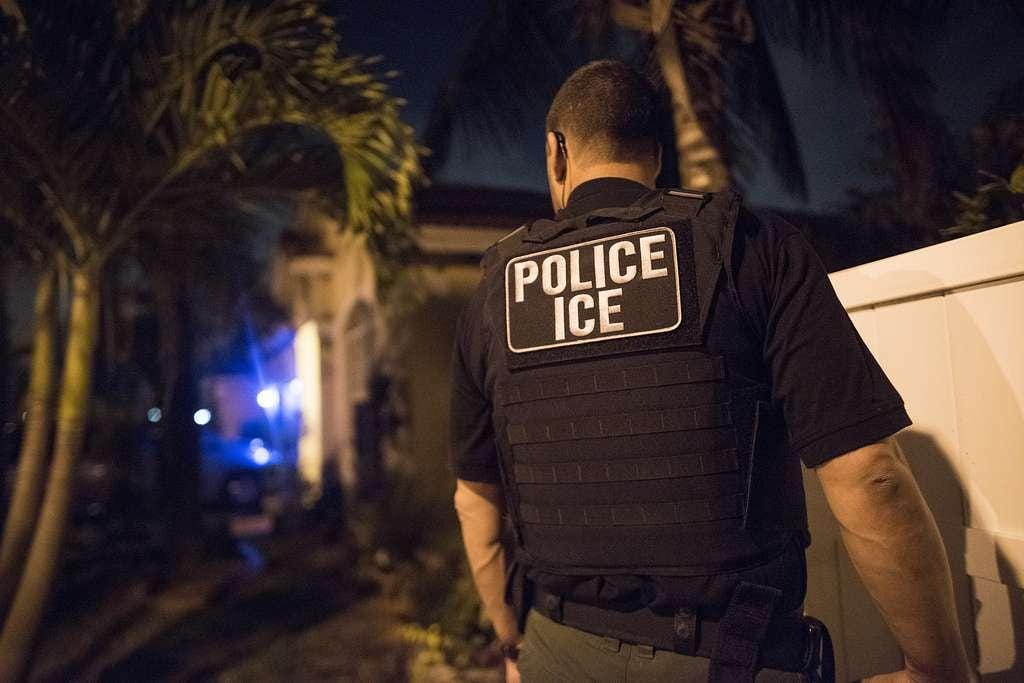
Asian American lawmakers are leading a push to shield Southeast Asian refugees from deportation as the Trump administration continues its draconian crackdown on immigration.
About the bill: Reps. Judy Chu (D-Calif.) and Pramila Jayapal (D-Wash.), along with Zoe Lofgren (D-Calif.), Ayanna Pressley (D-Mass.) and more than two dozen cosponsors, are reintroducing the Southeast Asian Deportation Relief Act of 2026 (SEADRA). The bill would protect Cambodian, Iu Mien, Hmong, Lao and Vietnamese refugees who fought alongside U.S. forces or fled ethnic cleansing and political persecution. More specifically, it would bar the Department of Homeland Security (DHS) from detaining or deporting those who arrived by 2008 and hold final removal orders.
This year’s version expands on earlier iterations in notable ways. It establishes a pathway back to the U.S. for more than 2,000 refugees already removed to Southeast Asia and allows those still in the U.S. to reopen and vacate their removal orders. The bill also makes employment authorization permanent and replaces mandatory in-person Immigration and Customs Enforcement (ICE) check-ins with virtual ones every five years.
Why it matters: The bill’s reintroduction comes as the Trump administration continues to pursue removals at an unprecedented scale. Last year, it deported more Southeast Asian Americans in a single fiscal year than any prior administration, sending 46 to Cambodia, 175 to Laos and 676 to Vietnam. Many were shackled on flights lasting more than 50 hours to nations they had never set foot in. The removals separated families across multiple states, among them individuals who had lived in the U.S. since childhood. Others were sent to third countries in Africa through largely confidential agreements, leaving their U.S.-based attorneys unable to reach them.
Between 1975 and 2008, the U.S. resettled more than 1.2 million Southeast Asian refugees in what remains the country’s largest such program, though many were placed into underserved neighborhoods without adequate services or support for the trauma stemming from war and displacement. Many of those now facing removal were convicted of offenses decades ago and have long since served their sentences. Advocates call this “double punishment” and note that many of those targeted now serve as primary caregivers for families that include U.S. citizens.
What they’re saying: In a news release, Chu accused Trump of making “the entire immigrant community his scapegoat to justify horrifying violence, undermine our rights and tear families apart.” Jayapal noted that the bill was “a long-overdue step to end the constant fear of deportation.” Meanwhile, Lofgren, who represents San Jose and its large Vietnamese American population, argued that shielding refugees from forced return to Cambodia, Laos and Vietnam is consistent with the position of every prior U.S. administration, Republican and Democratic alike.
Community advocates were no less emphatic. Quyên Đinh, executive director of Southeast Asia Resource Action Center (SEARAC), called the legislation “a promise of healing, hope and a future where Southeast Asian families are no longer torn apart.” Chhaya Chhoum, co-executive director of Southeast Asian Freedom Network (SEAFN), was unequivocal. “We belong here and no one is disposable,” she said. The bill is endorsed by both organizations, along with more than 100 others nationwide and statewide.
Former Massachusetts official claims anti-Asian racism led to her ouster
A former Massachusetts official tasked with senior welfare has filed a lawsuit alleging that anti-Asian bias drove her out of a job in Gov. Maura Healey’s administration.
