

Nithya Raman is heading to November after overcoming a sizable election-night deficit and eliminating Republican Spencer Pratt from the Los Angeles mayoral race. The result puts the Indian American councilmember within reach of becoming the city’s first Asian American mayor, setting up a high-profile showdown with incumbent Karen Bass.
We’re also looking at new data that challenge the perception of uniform Asian American educational success, a lawsuit threatening Native Hawaiian homestead protections and a study finding growing acceptance of political violence among some Americans. Plus: anti-Asian messages linked to the Karen Read investigation, China’s brain-chip milestone and a controversy over how Japan remembers the Nanjing Massacre.
Featured
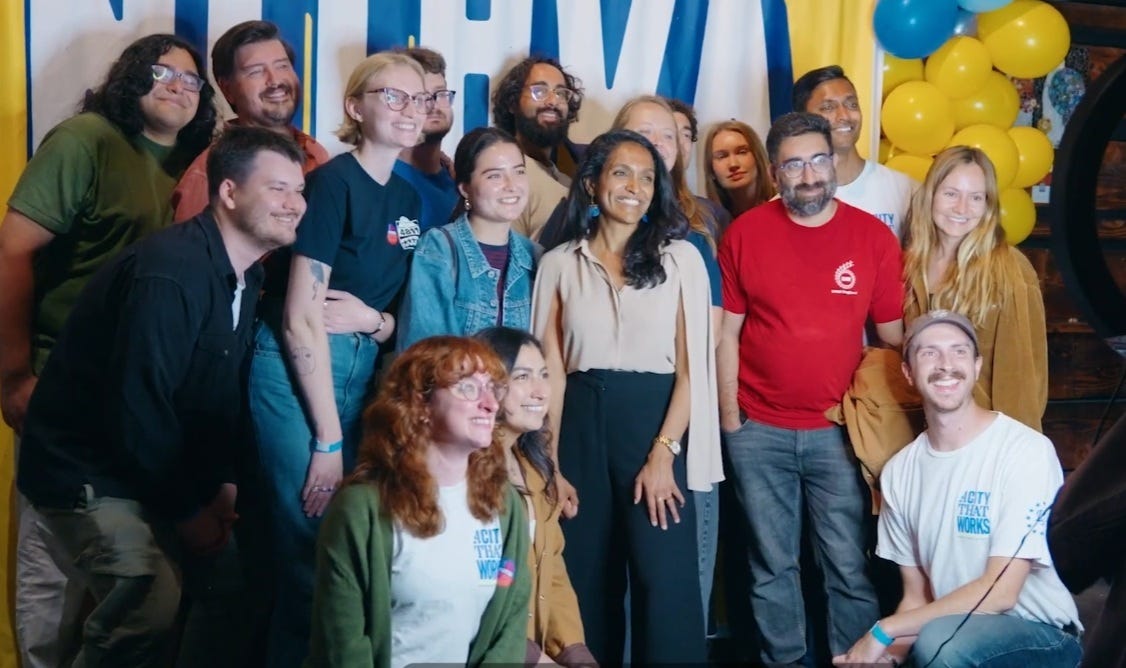
Raman advances to November, setting up historic Bass showdown
Nithya Raman has secured a spot in Los Angeles’ November mayoral election after overcoming a significant election-night deficit and overtaking Republican Spencer Pratt through successive ballot counts.
The result sets up a one-on-one race against incumbent Karen Bass and puts Raman within reach of becoming the first Asian American mayor in city history. For many AAPI Angelenos, the race will be about more than representation, serving as a test of competing approaches to homelessness, public safety and economic recovery.
Graham Platner wins Maine Democratic primary amid misconduct allegations
Maine Democrats have nominated Graham Platner for the Senate despite months of controversy surrounding misconduct allegations and questions about a tattoo linked to Nazi symbolism. His victory sets up a high-stakes race against longtime Republican Sen. Susan Collins.
California’s Asian American education success story leaves some behind
A new California report found that educational outcomes vary dramatically across Asian American and Pacific Islander communities. While Asian Americans overall have some of the state’s highest college attainment rates, fewer than 30% of Cambodian, Hmong and Laotian adults hold bachelor’s degrees, while Native Hawaiian and Pacific Islander communities trail even further. Researchers say aggregated data have long obscured those disparities.
Karen Read lawsuit exposes anti-Asian police messages
Anti-Asian slurs are among thousands of messages cited in a new lawsuit involving investigators tied to the Karen Read case. The allegations have renewed concerns about racial bias within law enforcement and raised questions about how cases involving minority communities may have been handled.
Native Hawaiian homestead program faces legal challenge
A federal lawsuit is seeking to strike down the blood-quantum requirement for Native Hawaiian homestead leases, arguing that the program violates constitutional protections. Hawaiian leaders view the challenge as part of a broader effort to dismantle Native Hawaiian institutions and land rights.
Most MAGA Republicans justify political violence, new study finds
A new UC Davis study found that more than half of self-identified MAGA Republicans believe political violence is justified under at least some circumstances. Researchers stressed that most Americans still reject political violence but warned that support tied to elections and immigration has increased.
China beats Musk’s Neuralink to a commercial brain implant
China has approved the world’s first commercially available invasive brain-computer interface, allowing some paralysis patients to regain limited hand function. The milestone puts Chinese developers ahead of Neuralink in bringing the technology to market.
Japan museum accused of whitewashing Nanjing Massacre
A proposed exhibit revision at a major Japanese museum would replace the term “Nanjing Massacre” with “Nanjing Incident,” drawing criticism from historians and activists. Opponents argue the wording change risks softening public understanding of one of the most contested atrocities of World War II in Asia.
“Heated Rivalry” star Hudson Williams faces backlash over resurfaced photo
“Heated Rivalry” actor Hudson Williams is facing scrutiny after a photo from his teenage years resurfaced showing a swastika drawn on his forehead. Supporters argue he was unaware of the symbol at the time, while critics say the image deserves serious examination regardless of intent.
Why read Issue #221?
Progress and exclusion often exist side by side. One community may be celebrating a political breakthrough while another is fighting to preserve rights it has held for generations. A group may be widely perceived as successful even while some of its most vulnerable members continue to be overlooked. The stories in this issue are reminders that broad narratives can obscure very different realities underneath.
Several of these stories also involve questions about who gets remembered, protected or represented. Whether the subject is educational opportunity, Native Hawaiian land rights, wartime history or bias within institutions, the underlying debate is often about whose experiences remain visible and whose are allowed to fade into the background.
Support independent Asian diaspora journalism. Become a paid subscriber to read the full stories and help sustain The Rebel Yellow.
The Rebel Yellow is supported in part by funding from The Asian American Foundation (TAAF). Funders do not influence story selection, reporting, or editorial decisions. All editorial content is independently produced by The Rebel Yellow team.