

The Rebel Yellow - Issue #149
Simu Liu said recent casting trends show a renewed decline in Asian representation in Hollywood. Lucy Liu’s film Rosemead continued its festival run ahead of its December theatrical release. A Shohei Ohtani bat matched to five home runs sold for $300,000 at auction, and HIKARI’s feature Rental Family opened in U.S. theaters. A new transparency feature on X revealed several major MAGA accounts operating from overseas, while federal court filings detailed internal discussions at major social media platforms about features described as addictive for teens. Internationally, the Met Museum returned an 18th-century Buddhist painting to South Korea, and former Philippine mayor Alice Guo was sentenced to life for trafficking.
Simu Liu calls out renewed decline of Asian representation in Hollywood
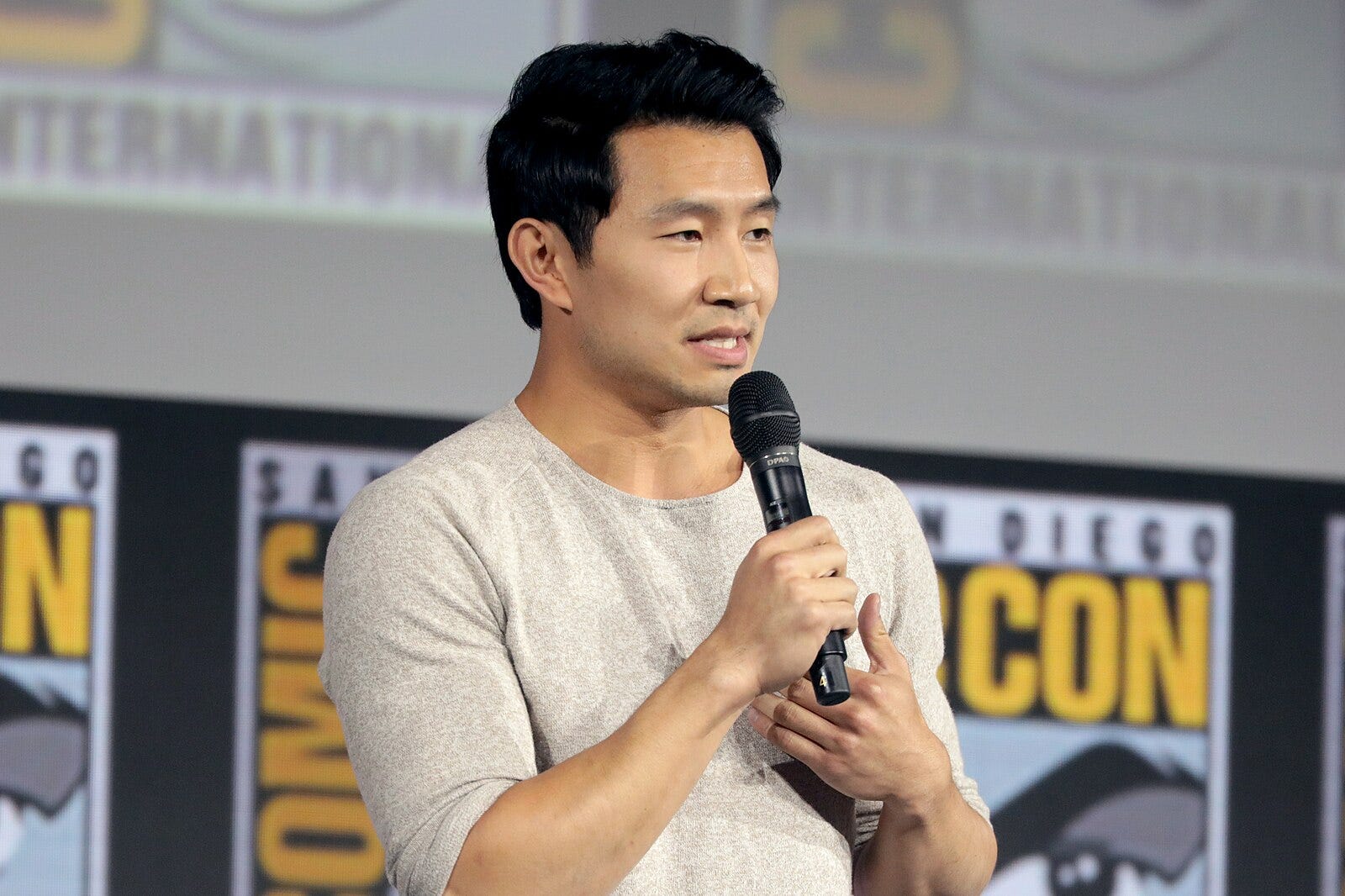

Simu Liu is urging the film industry to confront what he calls a troubling reversal in Asian visibility on screen. In a widely shared social media post this week, the actor said recent casting trends show an industry moving backward rather than building on earlier progress. He described the shift as “fucking appalling,” arguing that the setbacks point to deeper systemic issues.
Questioning studio claims of “risk”: Liu challenged the idea that Asian-led projects remain uncertain investments, pointing to recent films that have drawn critical and commercial success. Citing titles such as “Minari,” “The Farewell,” “Past Lives,” “Everything Everywhere All at Once,” “Crazy Rich Asians” and “Shang-Chi,” he wrote that “every single one a financial success.” The Chinese Canadian star added that “no Asian actor has ever lost a studio even close to 100 million dollars but a white dude will lose 200 million TWICE and roll right into the next tentpole lead,” presenting the disparity as evidence of unequal treatment.
Discussion about casting pressures: The actor’s remarks appeared in response to a social media thread about Asian men in romantic lead roles, which highlighted the challenges performers continue to face in securing varied opportunities. Posts within the thread included comments from Manny Jacinto and references to limited genre offers for John Cho, underscoring the frustrations many actors have voiced about typecasting. By sharing the thread, Liu linked these individual experiences to industry patterns that restrict the roles available to Asian performers.
Calls for industrywide accountability: Liu concluded his message by characterizing the circumstances facing Asian actors as part of a broader structural problem that continues to shape casting and greenlighting decisions. “We’re fighting a deeply prejudiced system. And most days it SUCKS,” he wrote. His comments add to ongoing discussions among Asian and Asian American audiences who have pushed for meaningful improvement in visibility, consistent casting opportunities and equitable decision making across major studios.
Lucy Liu’s 7-year journey to “Rosemead” reveals emotional toll of mother-son drama
“Rosemead,” which premiered June 6 at the Tribeca Festival, follows a mother in Los Angeles’ San Gabriel Valley who, while facing terminal illness, takes drastic steps to shield her mentally ill son from harm. Lucy Liu, who stars in and produced the film, stayed with the project through seven years of development and delays.
A role rooted in urgency
Liu called the experience of playing Irene one of the most physically and emotionally demanding of her career. “It was gut-wrenching from a cellular level,” she told Variety. “It cut to the bone.”
The script, written by Marilyn Fu, is based on a 2019 Los Angeles Times article about a mother’s attempt to protect her son amid fears of police intervention. Directed by Eric Lin in his feature debut, the film’s production moved to New York, though its story remains grounded in the predominantly Asian American suburb of Rosemead, California.
Returning to familiar ground
Speaking to NY1, Liu reflected on filming in New York, where she was raised in Queens. She said the story’s core dynamic, between a protective immigrant parent and a child facing mental illness, echoed emotional tensions familiar to many first-generation families. She also noted the rarity of stories like this receiving attention, especially those centered on Asian American lives.
At the Tribeca premiere, Liu addressed the broader stakes of the film’s message. “I think that the community that I grew up in definitely does not really accelerate in understanding what mental health is,” she said. “I hope that they investigate a little bit more and are not afraid to ask questions. To ask for help and to also understand that there is support out there.”
Release plans
On Nov. 2, Liu received the Realta Award for Outstanding Performance at the Belfast Film Festival for her portrayal of Irene. The official trailer, released earlier this month, shows Irene’s deteriorating health and her growing desperation to protect her son, set within the pressures of a Chinese American community in the San Gabriel Valley.
The film is scheduled for U.S. theatrical release on Dec. 5 in New York and Dec. 12 in Los Angeles. Picture Tree International has acquired global sales rights, while Vertical will handle North American distribution.
Ohtani bat fetches $300,000 at auction
A Shohei Ohtani bat photo matched to five home runs during his 2024 season led SCP Auctions’ 2025 Fall Premier sale in Laguna Niguel, California, closing at $300,000 on Saturday.
The Chandler model bat was used during Ohtani’s 54-home run and 59-steal campaign, the first 50-50 season in Major League Baseball history. A ball from his second home run in Game 4 of the 2025 National League Championship Series followed at $270,000, making it the auction’s second highest result.
The online auction opened Nov. 5 and closed with an extended bidding period on Nov. 22, with both Ohtani items positioned among the top featured lots.
Ohtani’s career achievements contributed to the prominence of the items in the sale. He has earned multiple Most Valuable Player awards in both leagues and sustained elite production at the plate after previously performing at a high level on the mound.
How HIKARI turned Japan’s rental-family world into a movie about connection
(Presented by Searchlight Pictures)
HIKARI is a Japanese filmmaker who often tells stories about loneliness and what it means to feel out of place. When she was 17, she moved from Japan to the U.S. and became the only Asian student at her school — an outsider experience that shaped how she approaches her work.
Before making movies, she worked in photography, dance and visual art. She pays close attention to how a scene looks and feels, and says that if one shot helps the audience connect with a character, she’s done her job.
Her first feature, 37 Seconds, won major awards at the Berlin Film Festival, and she has since directed episodes of Beef and Tokyo Vice. With her new feature film, Rental Family, she turns her focus to Japan’s real “rental family” industry, where actors are hired to play relatives for people who need company or support.
Rental Family stars Brendan Fraser as an American actor living in Tokyo who takes a job pretending to be people’s relatives — a dad, a coworker, even a mourner at a funeral. As he gets deeper into the work, the fake roles start to feel real, and he’s forced to rethink what connection and family actually mean.
Rental Family is now playing in theaters nationwide. Get tickets now!
Prominent MAGA influencers on X exposed as foreign actors
A new transparency feature on X has revealed that numerous prominent MAGA influencers are actually foreign actors, with many accounts traced to Asia, Eastern Europe and Africa.
Busted: X rolled out its “About This Account” feature on Friday, allowing users to check an account’s country of origin, sign-up date, frequency of username changes and the method used to download the app. Within hours, rival political factions began investigating each other’s accounts, uncovering dozens of supposedly patriotic American profiles that were actually operated from overseas.
Among the most prominent examples include @MAGANationX, which has nearly 400,000 followers and a bio reading “America First” and “Patriot Voice for We The People.” As it turns out, the account actually operates from Eastern Europe. The account @IvankaNews_, which has a million followers and frequently posts about immigration threats, is based in Nigeria. Other accounts include Dark Maga from Thailand, MAGA Beacon from South Asia and MAGA Scope from Nigeria.
What this means: The revelations highlight the need for critical evaluation of social media content. It appears foreign actors exploit American political divisions for financial gain, as X pays content creators based on engagement from verified accounts. This payment structure can incentivize divisive content regardless of accuracy or source.
The implications are especially relevant for Asian Americans, who frequently encounter xenophobic rhetoric on social media. Understanding that some divisive content originates from foreigners operating for profit rather than from genuine domestic discourse may provide important context for evaluating online political narratives. And while the problem predates Musk’s October 2022 acquisition of the platform, it has exacerbated since, with X’s AI chatbot Grok also accused of spreading false claims.
Big stakes: Democratic influencer Harry Sisson called the revelations “easily one of the greatest days on this platform,” saying they vindicate warnings about foreign interference. Meanwhile, MeidasTouch co-founder Brett Meiselas emphasized the broader impact, saying, “Think about the lawmakers who feel pressured by accounts like this. Think about the disinformation that spreads as a result.”
The revelations also confirm what some researchers already knew. The Centre for Information Resilience flagged fake MAGA accounts during the 2024 election, including those using stolen photos of European models. Separately, the Justice Department discovered last year that popular right-wing influencers were unknowingly paid by a Russian influence operation.
The feature was briefly removed hours after going live, but has since been restored. X’s head of product development Nikita Bier acknowledged “a few rough edges,” including VPN-related inaccuracies that they plan to address.
Social media giants knew platforms were “addictive drug” for teens, court filings reveal
Internal communications from Meta Platforms Inc., TikTok, Snap Inc. and YouTube, revealed in a 5,807-page federal court filing unsealed this month, show employees describing their own platforms as an “addictive drug” for teens. An email attributed to Meta CEO Mark Zuckerberg states, “If we tell teens’ parents and teachers about their live videos, that will probably ruin the product from the start.” Expert reports submitted with the filing link platform features to serious youth risks such as eating disorders and suicidal thoughts, findings the companies’ own internal research had already flagged.
“We’re basically pushers”
The documents contain chat logs in which a Meta senior researcher wrote, “IG [Instagram] is a drug,” and a colleague replied, “LOL, I mean, all social media. We’re basically pushers.” Additional emails show internal debate over how youth‐oriented features should operate, including warnings against alerting parents or teachers about teen streams. Expert reports submitted with the filing state the companies’ own research flagged correlations between platform features and youth risks such as eating disorders and suicidal thoughts.
Engineered to hook teens
Plaintiffs use a consumer-product liability approach, arguing the platforms had design defects and failed to warn users, rather than treating them solely as content hosts. The 2025 filing was submitted in the U.S. District Court for the Northern District of California and includes expert assessments of algorithmic and notification systems engineered to boost teen usage. These reports further reference internal comparisons suggesting weaker protections for U.S. minors compared to international peers, and they claim firms treated teen engagement as a core business metric.
Why this matters
Recent Pew Research data shows that Asian Americans are among the most active social media users nationwide. With teens and young adults spending significant time on these services, families are directly exposed to the very features social media employees themselves described as addictive. The documents also show how algorithms determine what content appears credible or popular, which is important for parents who are monitoring how teens interpret posts that may not reflect real experiences.
Met Museum returns 18th Century Buddhist painting to South Korea
The Metropolitan Museum of Art has returned a Buddhist painting from 1798 to a South Korean temple, acknowledging the work was believed taken while the temple was under U.S. Army control during the Korean War.
A long-awaited comeback: “The Tenth King of Hell” (1798), an ink-on-silk scroll showing one of Buddhism’s 10 judges who determine the fate of the deceased, was formally returned to Sinheungsa Temple in Sokcho, Gangwon province, during a ceremony in Seoul on Nov. 14. This followed a collaborative investigation between the museum, temple representatives and the Sokcho Committee for the Return of Cultural Heritage, who visited the Met multiple times to examine the work’s provenance.
During negotiations, committee chairman Lee Sang-rae told the Chosun Daily that when his group showed Met officials a photograph of U.S. soldiers splitting wooden printing blocks from the temple to make coffee fires, “they were shocked and even teared up.”
Why this matters: The painting’s return addresses how American military occupation enabled cultural displacement during wartime. For Korean Americans, the painting’s repatriation validates that cultural heritage warrants protection even during conflict and that institutions must confront difficult histories about how warfare shaped their collections.
Three more to go: The painting, one of 10 scrolls originally from the temple, was purchased by the museum in 2007 from a Los Angeles collector through art dealer Michael C. Hughes. The Los Angeles County Museum of Art returned six panels in 2020, bringing the total returned to seven. Lee says his committee “will continue our efforts to ensure that the remaining three Ten Kings of the Underworld paintings still abroad can also return home.”
The return follows the Met’s 2023 Cultural Property Initiative, which hired additional provenance researchers and expanded positions from six to 11 under newly appointed Head of Provenance Lucian Simmons. Since launching the initiative, the museum has returned works to Cambodia and Thailand, as well Turkey, Italy and Spain. Beyond institutional efforts, South Korea’s Overseas Korean Cultural Heritage Foundation has documented nearly 248,000 Korean artifacts abroad and successfully repatriated 2,854 objects while also supporting conservation of works that left Korea through legitimate means.
Chinese woman who became a Philippine mayor sentenced to life for trafficking
Former Bamban mayor Alice Guo, identified by Philippine investigators as Chinese national Guo Hua Ping, received a life sentence after a court ruled she trafficked workers through a scam compound linked to her companies and implicated in alleged espionage activities. Authorities said she used falsified documents to present herself as a Filipina and qualify for public office. Prosecutors stated the victims were coerced into operating online gaming and romance-scam schemes.
Pretending to be Filipino: Guo was elected mayor of Bamban in Tarlac province in June 2022 but was removed in August 2024 after investigators determined she was a Chinese national who could not legally hold local office. A separate ruling voided her election after authorities found irregularities in her identification records. The findings led to broader scrutiny of her business interests and connections to offshore gaming.
Links to online scam operations: The case centered on a March 2024 raid on a compound behind the Bamban municipal building where authorities said hundreds of Filipino and foreign workers were held and compelled to run online scam operations. Evidence presented in court included seized electronic devices, employment documents and worker testimonies describing restricted movement and pressure to participate in fraud schemes. The court found her guilty of qualified human trafficking and imposed a 2 million peso ($34,000) fine along with victim compensation.
Victory against crime: Philippine officials cited the verdict as a major step in efforts to curb trafficking tied to online scam centers. “The conviction of Alice Guo, also known as Guo Hua Ping, is a victory against corruption, human trafficking, cybercrime and many other transnational crimes,” Senator Risa Hontiveros said.