

Today’s stories trace a sharpening pressure on Asian American communities from the institutions meant to govern them. Nearly 400 naturalized citizens face a revocation campaign unlike any before it, and a Texas congressman’s new deportation bill, drafted as an acronym aimed at a mayor, widens who could be targeted. Closer to home, a San Francisco resolution bears a grandfather’s name five years after his killer walked free, while Washington advocates push back on raids sweeping up Asian massage workers. Elsewhere, a defense contractor publishes a manifesto ranking cultures as lawmakers probe its surveillance tools. A pioneering governor dies at 100, and a sequel lands on a slur.
Featured
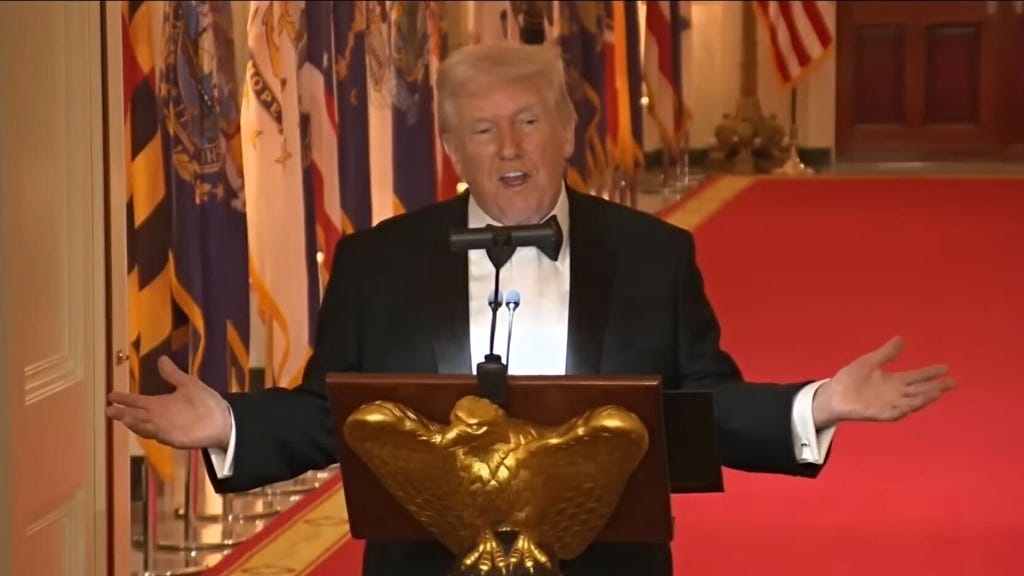
Trump admin targets nearly 400 citizens in unprecedented denaturalization push
Federal prosecutors across nearly 40 U.S. attorney offices have reportedly been mobilized to pursue citizenship revocation against nearly 400 naturalized Americans, a shift from the Washington-based specialists who long handled these cases. A DOJ spokesperson called it the highest volume of denaturalization referrals in history.
Asian Americans sit squarely in the path, and a senior official says this is only the first wave.
What else we’re tracking
San Francisco honors Grandpa Vicha with senior safety resolution
Five years after Vicha Ratanapakdee was fatally shoved on a morning walk, the San Francisco Board of Supervisors passed a resolution in his name committing the city to expanded senior safety measures. The vote arrives weeks after a courtroom outcome that weighed heavily on his family and AAPI advocates. It raises the question of what protection can look like when the criminal process fails.
Palantir manifesto declares some cultures ‘harmful’ as lawmakers demand answers on surveillance tools
Palantir published a 22-point manifesto on X declaring some cultures regressive and harmful and arguing that tech companies must support U.S. military power. The post drew more than 32 million views and pointed backlash over a contractor setting itself up as a cultural authority. It landed days after Democratic lawmakers pressed DHS and ICE for answers about what the company’s systems actually do.
GOP bill named after Mamdani would deport noncitizens tied to socialist, Islamist groups
Rep. Chip Roy’s MAMDANI Act would bar, deport or denaturalize any noncitizen affiliated with or advocating for socialist, communist or Islamic fundamentalist groups, with determinations shielded from court review. While the acronym names New York’s new mayor, a closer read of the bill’s definitions suggests the reach extends well past him. The language reaches ordinary religious practice and sweeps in named Chinese organizations.
Advocates demand halt to raids targeting Asian massage workers after crackdown in Washington
Coordinated raids shut down five Asian-run massage businesses in Bothell on April 14, with police citing suspected prostitution and trafficking. Advocates say the operations displaced workers and deepened fear, and the tactics on the ground raised civil rights concerns reaching beyond this crackdown. Organizers warn the pattern is spreading across the region, with the 2026 FIFA World Cup driving the pressure.
George Ariyoshi, first Asian American US governor, dies at 100
George Ariyoshi, the son of Japanese immigrants who became the first Asian American governor in U.S. history, died April 19 at his Honolulu home weeks after his 100th birthday. His path from a two-room tenement near Honolulu Harbor to Hawaii's longest-serving governorship ran alongside the generation of Nisei veterans who drove the state’s postwar political shift. Gov. Josh Green ordered flags lowered through his memorial service.
‘The Devil Wears Prada 2’ boycott calls grow over ‘ching chong’-linked character
Boycott calls are spreading across China, Japan, South Korea and Hong Kong after viewers said a Chinese character’s name in a promotional clip echoes a racist slur. Jin Chao, played by Helen J. Shen, is introduced in a scene critics say leans on a familiar stereotype of the academically accomplished but socially awkward Asian. The backlash has zeroed in on the filmmakers’ choices about her name, styling and dialogue.
Why read Issue #203?
The burden of proof is shifting, and Asian American communities are being asked to carry more of it. A naturalized citizen is now expected to defend a status that was already granted. A Muslim, South Asian or Chinese American resident is now expected to prove that ordinary religious or political life does not match a definition written to exclude them. A massage worker is left to explain why a complaint should not cost her livelihood. Across all of it, the machinery moves first, and the community is left to answer for itself. This issue shows how early the pressure begins.
Support independent Asian diaspora journalism. Become a paid subscriber to read the full stories and help sustain The Rebel Yellow.
The Rebel Yellow is supported in part by funding from The Asian American Foundation (TAAF). Funders do not influence story selection, reporting, or editorial decisions. All editorial content is independently produced by The Rebel Yellow team.
Who's going to work while MAGA collects stamps?